Free to start · No watermark

AI Graphical Abstract Generator

The graphical abstract generator turns the abstract of your research paper into one panel that reads left to right, from problem to method to result, as a 2K image for the journal. Paste the abstract or describe the study, online, with nothing to install.

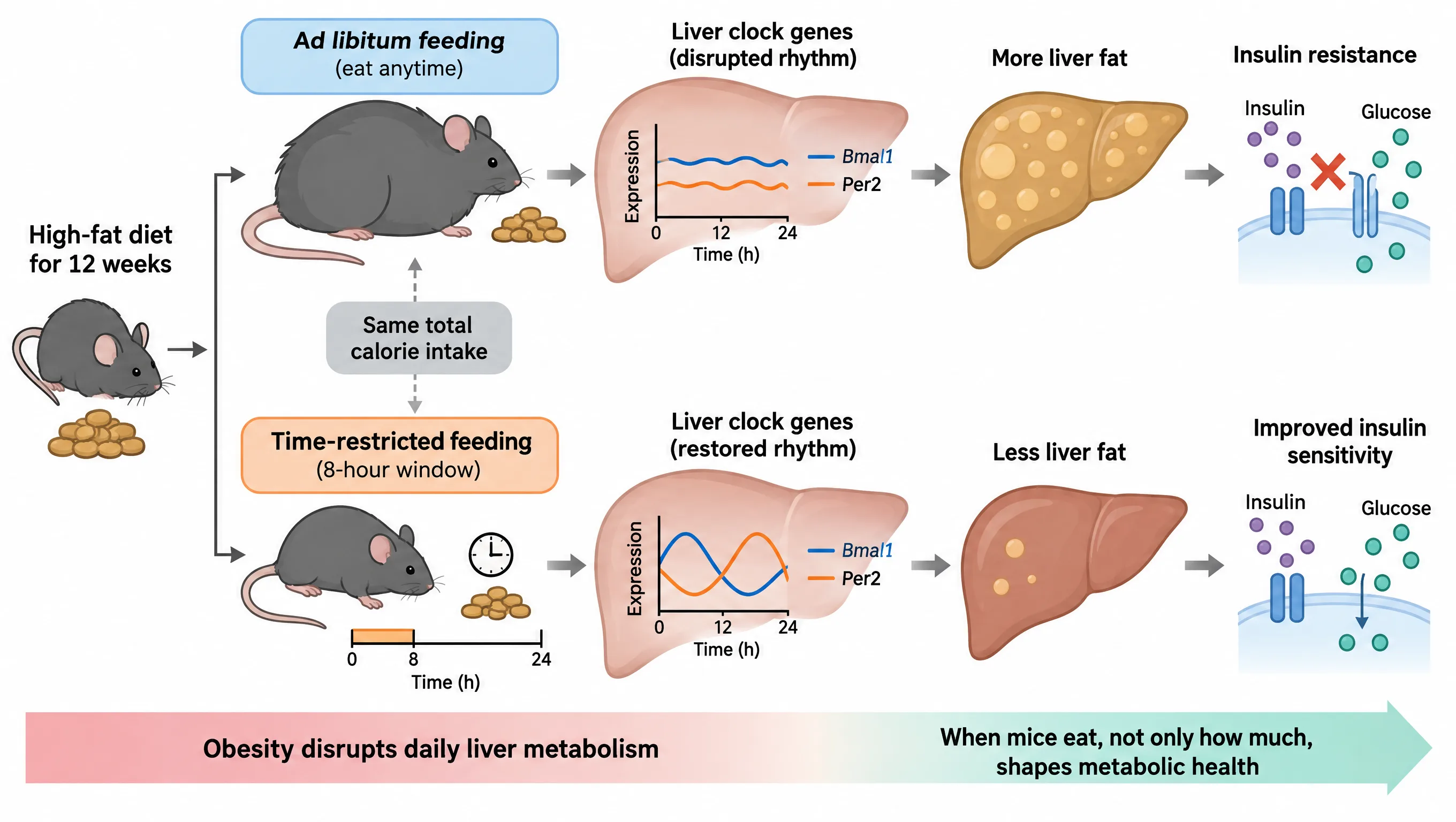
Graphical abstract made with the graphical abstract generator: mice on a high-fat diet eating freely or in an 8-hour window; the restricted group keeps the daily rhythm of liver clock genes, has less liver fat and better insulin sensitivity
Layout
  • 1 credit ≈ $0.20
  • 2K PNG, 300 DPI
  • Never used for training

From abstract to graphical abstract

How the graphical abstract generator reads an abstract

Problem, method, mechanism, result. Point at a highlighted phrase to see where the graphical abstract generator put it in the figure.

The abstract, pasted as written

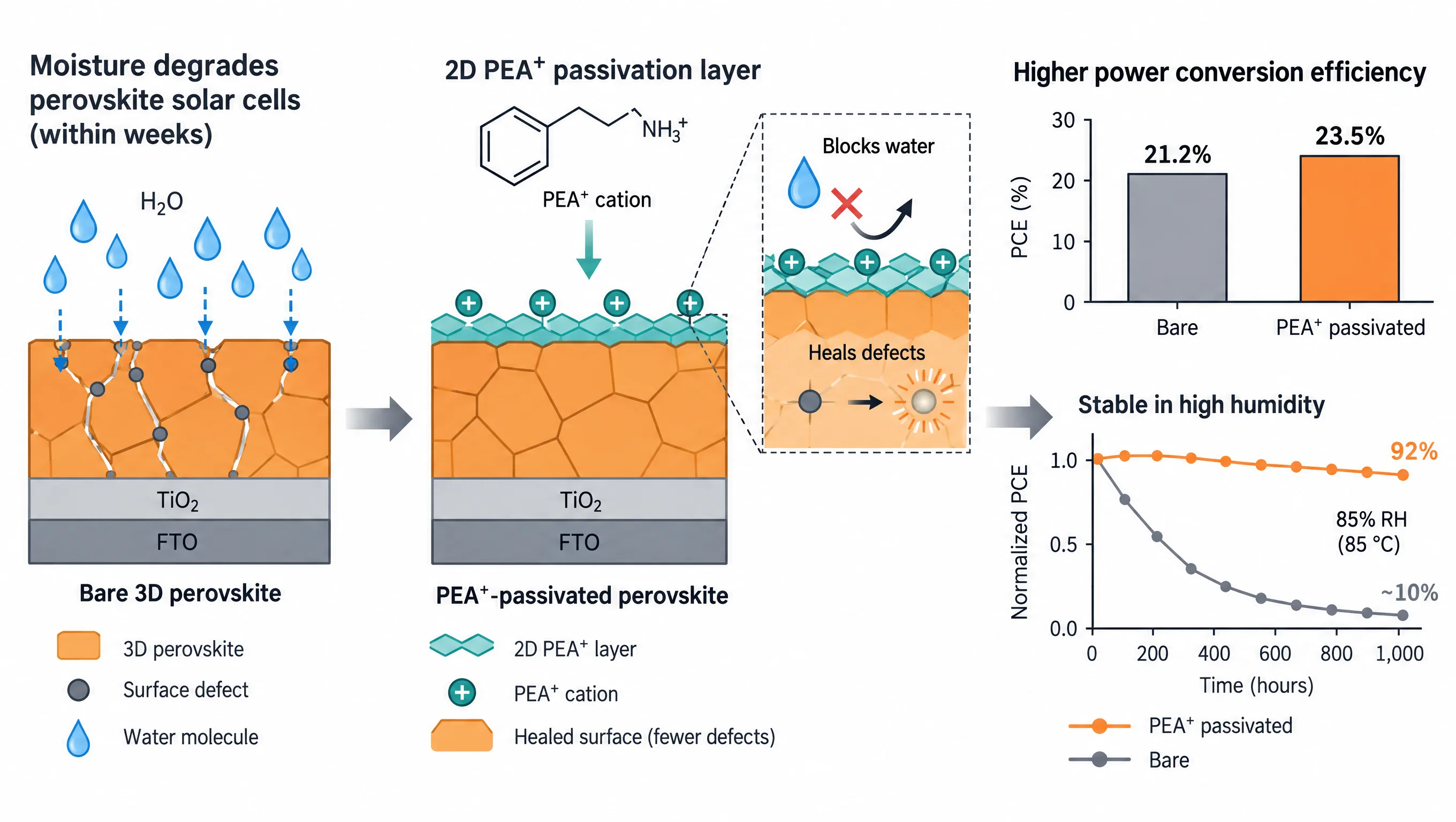
Moisture degrades perovskite solar cells within weeks. We coat the 3D perovskite film with a thin 2D passivation layer of phenethylammonium (PEA+) cations. The layer blocks water from entering and heals defects at the film surface. Power conversion efficiency rises from 21.2% to 23.5%, and cells keep 92% of their starting efficiency after 1,000 hours at 85% relative humidity.

Graphical abstract of a perovskite solar cell: water degrades the bare film, a 2D PEA+ passivation layer blocks water and heals surface defects, and efficiency rises from 21.2% to 23.5% with 92% kept after 1,000 hours

Before you submit

Will your journal accept an AI graphical abstract?

Elsevier, The Lancet and ACS reject AI-made graphical abstracts; most others accept them with a disclosure. Check your row before using any graphical abstract generator.

PublisherGraphical abstract sizeAI-made graphical abstractSource
ElsevierElsevier journals, including Cell PressGraphical abstract size:1328 × 531 px or larger (5:2), 300 DPINot acceptedGeneral-purpose AI image tools must not be used for graphical abstracts. AI flow charts inside the paper are allowed with a caption note.Read the rule: Elsevier
The LancetGraphical abstract size:No graphical abstract in the main journalNot acceptedAI is for brainstorming image ideas, not for the images you submit.Read the rule: The Lancet
ACSAmerican Chemical SocietyGraphical abstract size:TOC graphic 3.25 × 1.75 in (8.25 × 4.45 cm)Not acceptedAI-generated images cannot be used in table of contents graphics. AI cover art is allowed.Read the rule: ACS
RSCRoyal Society of ChemistryGraphical abstract size:TOC entry up to 8 × 4 cm, 600 DPICheck firstIllustrative AI graphics are allowed with a caption note, if the tool is trained on licensed data and cleared for commercial use. Ask the editor.Read the rule: RSC
Springer NatureNature Portfolio and Springer journalsGraphical abstract size:Set by each journalCheck firstPhotorealistic AI images are not permitted; drawn illustrations are not addressed. Disclose AI use and check the journal.Read the rule: Springer Nature
WileyGraphical abstract size:Set by each journalAllowed, disclose itAI tools are fine for diagrams and conceptual illustrations; name the tool in the figure caption.Read the rule: Wiley
MDPIGraphical abstract size:1100 × 560 px or largerAllowed, disclose itDeclare it at submission, describe it in Methods and name the tool in Acknowledgments.Read the rule: MDPI
Taylor & FrancisGraphical abstract size:Landscape 2:1, shown 525 px wideAllowed, disclose itAllowed for conceptual illustrations and flow diagrams, with disclosure. Not for research data or clinical images.Read the rule: Taylor & Francis
IEEEGraphical abstract size:660 × 295 px, 300 DPIAllowed, disclose itName the AI system and where it was used in the Acknowledgments.Read the rule: IEEE
PLOSGraphical abstract size:No graphical abstractAllowed, disclose itAI figures that illustrate or summarize results are allowed, disclosed in the figure legend.Read the rule: PLOS
FrontiersGraphical abstract size:No graphical abstract in the general guidelinesAllowed, disclose itAllowed when checked by the authors and disclosed with the tool, version and model.Read the rule: Frontiers

Checked against each publisher's own pages on 9 November 2026. Policies change; the author guidelines of your journal have the final word.

Compared

Graphical abstract generator vs icon tools, PowerPoint and ChatGPT

For most journals, talks and preprints the graphical abstract generator is fastest; for Elsevier, Cell Press and ACS, use an icon tool or PowerPoint. Checked 9 November 2026.

FeatureGraphical abstract generatorIcon tools (BioRender and similar)PowerPoint by handGeneral AI chat (ChatGPT and similar)
You start fromYour abstractTemplates and an icon libraryA blank slideA chat prompt
Built for journal figuresFigure style, journal layouts, 2K PNGScientific icons and templatesGeneral drawing toolsGeneral image chat
Elsevier, Cell Press and ACSNot accepted (general AI image model)Accepted; Elsevier points authors to these toolsAcceptedNot accepted
Drawing skill neededNoneArranging icons and arrowsA lotNone
Moving one elementChange the text and redrawFull controlFull controlAsk again in the chat
Cost to startFree creditsBioRender free plan: 3 figures, no publication useFree on the web with a Microsoft accountFree and paid plans

What makes a good graphical abstract

A good graphical abstract makes one point in one glance

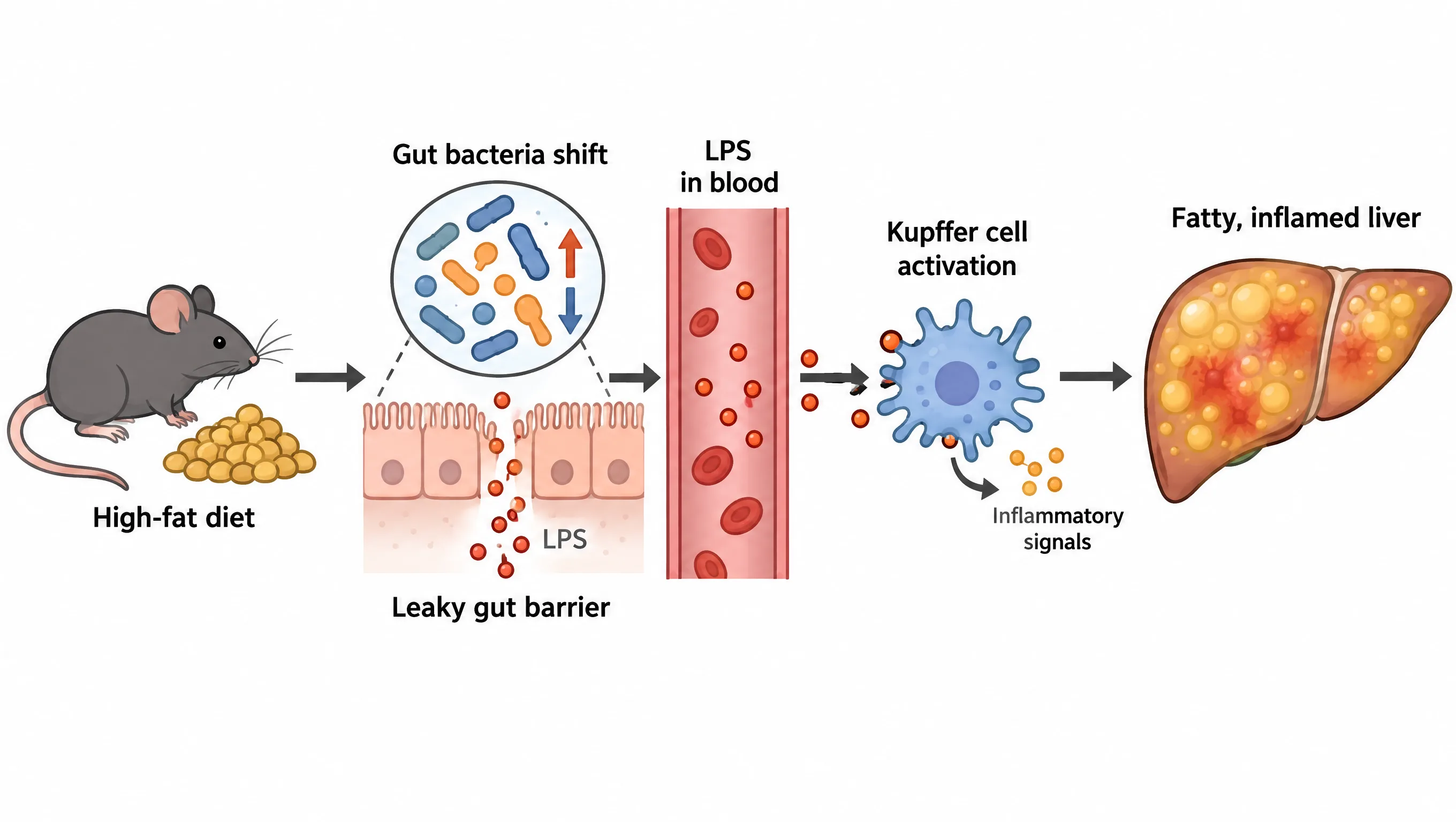
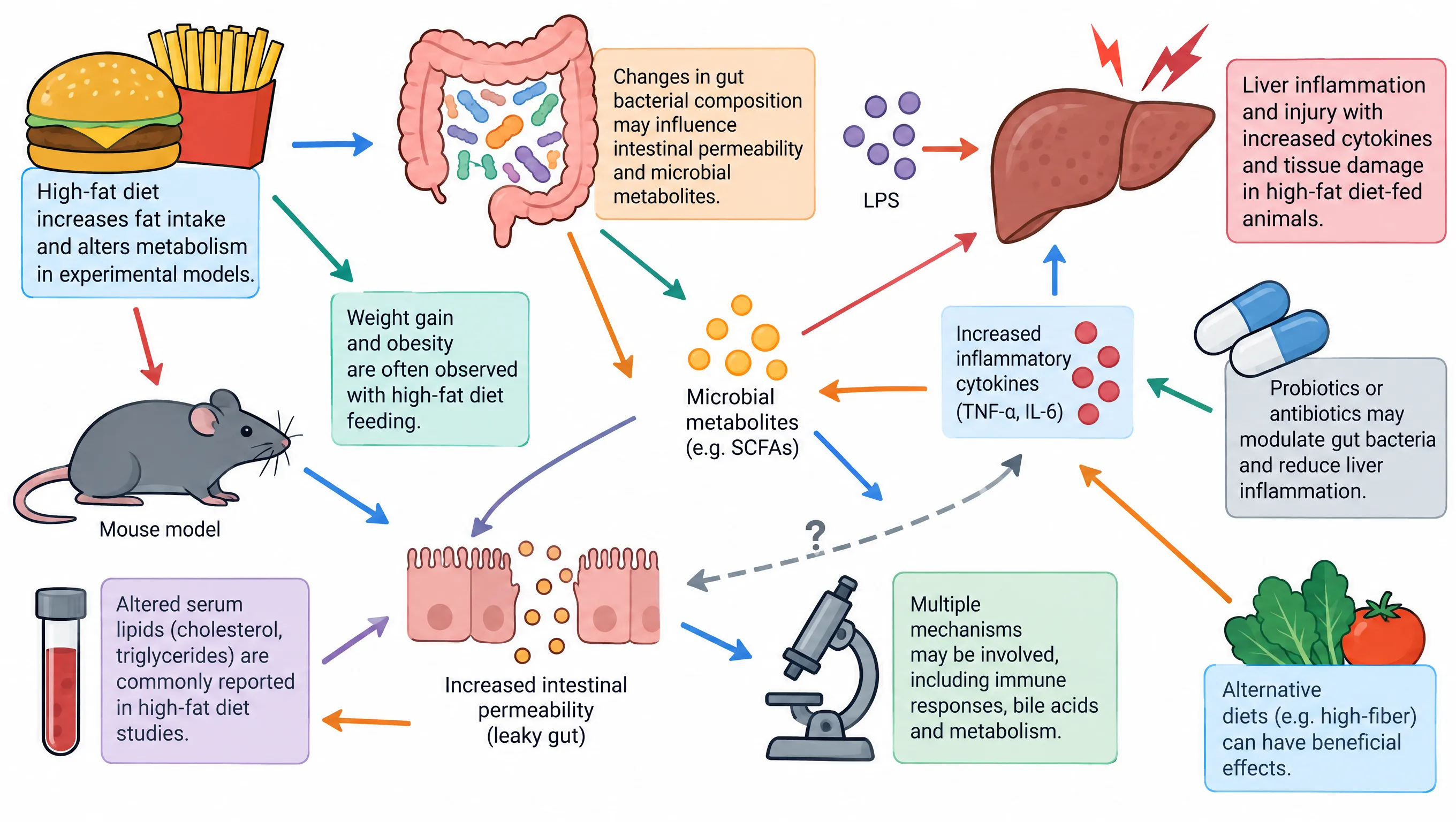
The same study drawn twice by the graphical abstract generator, the second cluttered on purpose. Readers scan a contents page in seconds; only the first gets the click.

Clear graphical abstract read left to right: a mouse on a high-fat diet, gut bacteria shift and the barrier leaks LPS, and the liver becomes inflamed and fatty

Reads in five seconds

  • One main message, left to right from cause to result
  • Short labels, never whole sentences from the abstract
  • A few colors, each with a meaning
  • Still readable as a small thumbnail
Deliberately cluttered graphical abstract about diet, gut bacteria and liver inflammation, with long text boxes and arrows in every direction

Gets skipped

  • Paragraphs of abstract text pasted into boxes
  • Arrows in every direction and no reading order
  • Icons that do not carry the story
  • Labels too small to read at thumbnail size

Graphical abstract examples

Graphical abstract generator examples from five fields

Each one came out of the graphical abstract generator in one pass, shown as readers meet it in a table of contents. Open the description or load it to fit your study.

Contents · made with the graphical abstract generator

  1. Chemistry

    Copper-doped TiO2 nanosheets turn CO2 into methanol under visible light

    “Copper-doped TiO2 nanosheets convert CO2 into methanol under visible light. Draw molecules as simple labelled formulas (CO2, H2O, CH3OH, O2), not ball-and-stick models. Left: CO2 and water. Middle: a TiO2 nanosheet with copper sites; visible light excites electrons that reduce CO2 at the copper sites while holes oxidize water to O2. Right: methanol yield three times higher than undoped TiO2.”
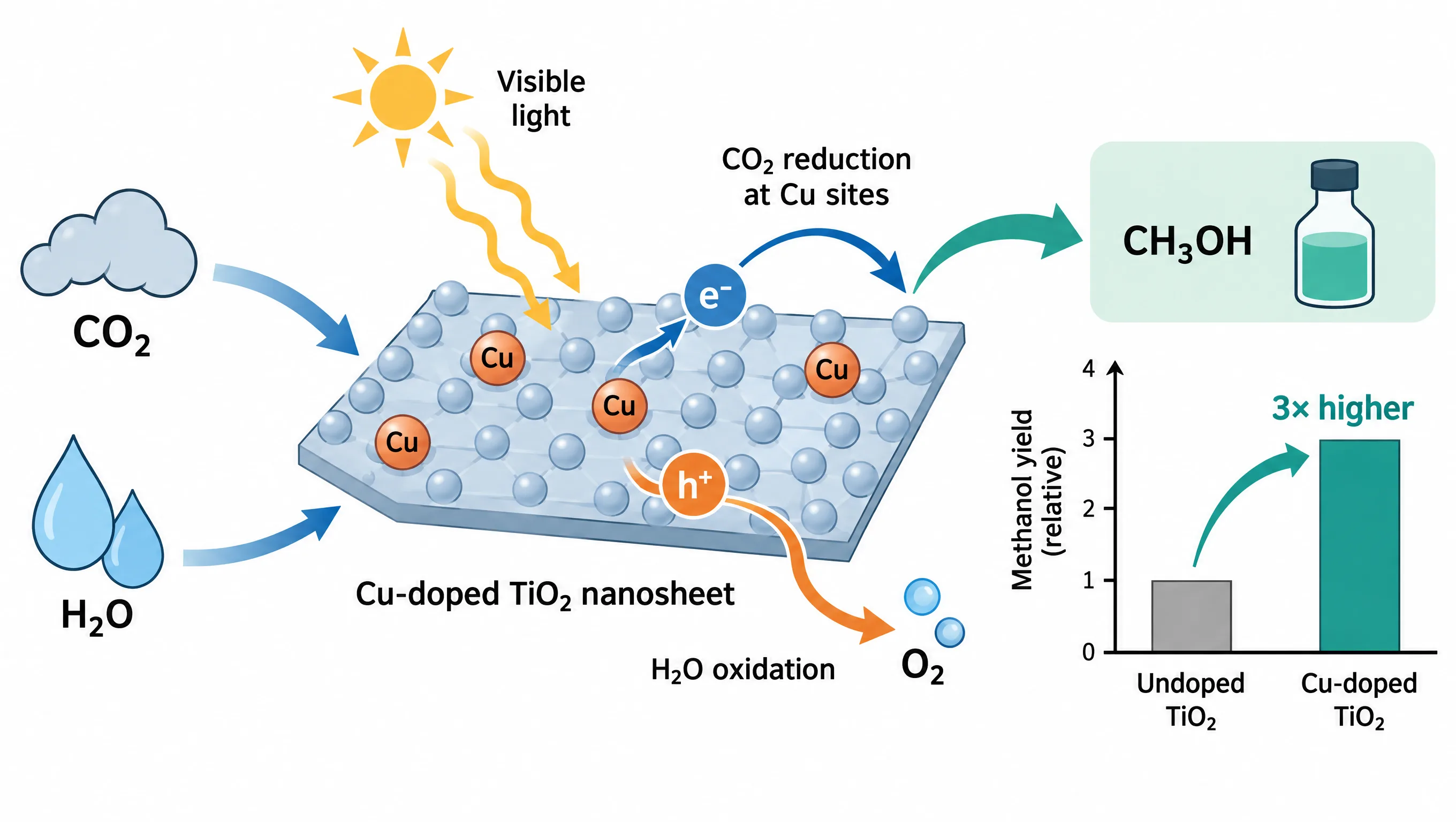
    Graphical abstract: copper-doped TiO2 nanosheet converts CO2 and water into methanol under visible light, with methanol yield three times that of undoped TiO2
  2. Machine learning

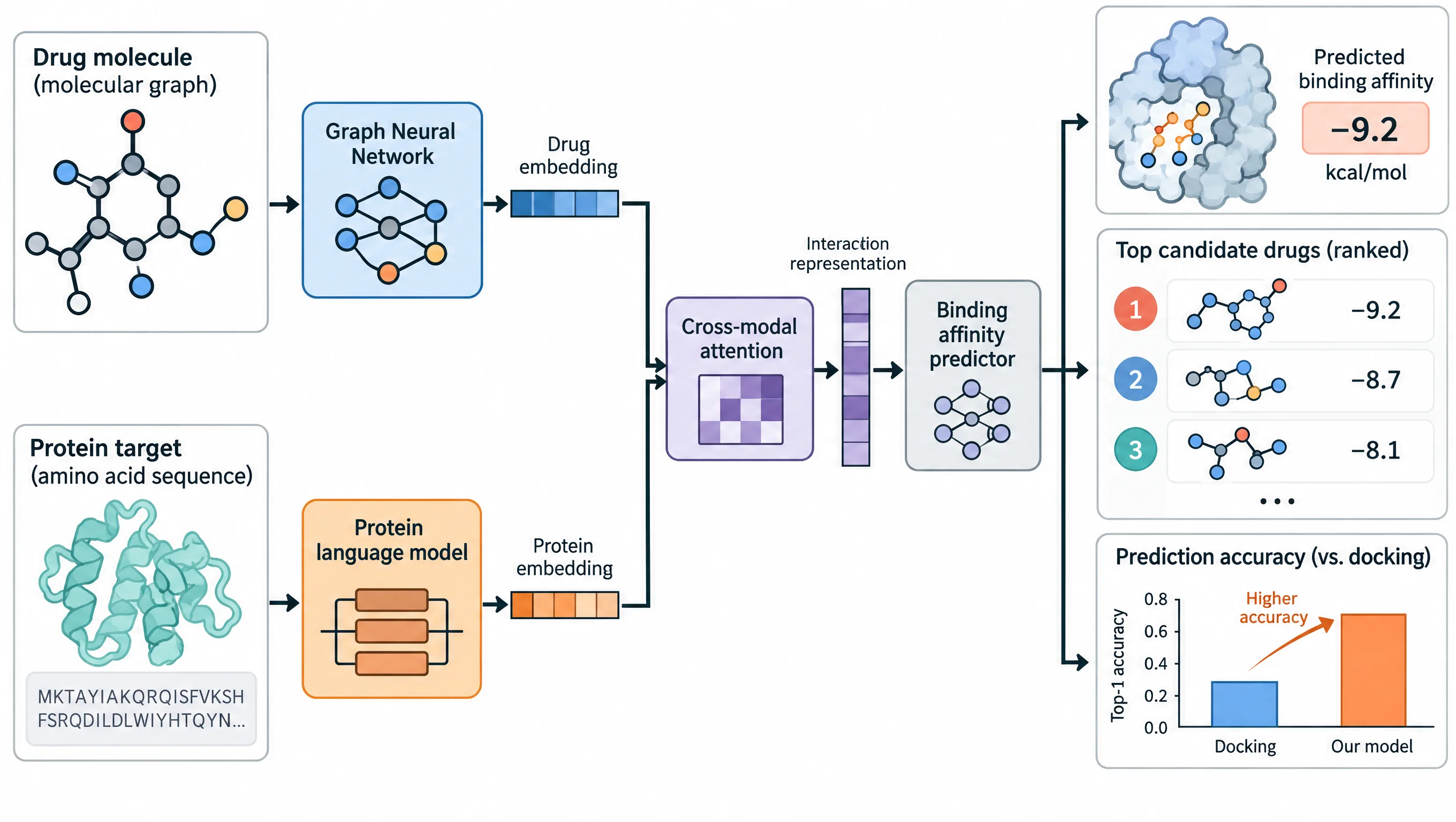
    A graph neural network predicts how strongly drugs bind their targets

    “A graph neural network predicts drug-target binding. Left: a drug molecule drawn as a molecular graph and a protein drawn as its amino acid sequence. Middle: the graph neural network encodes the molecule, a protein language model encodes the sequence, and an attention layer joins them. Right: predicted binding affinity, and a ranked list of candidate drugs, with higher accuracy than docking.”

    Graphical abstract: a graph neural network encodes a drug molecule, a protein language model encodes the target sequence, cross-modal attention predicts binding affinity and ranks candidate drugs
  3. Clinical research

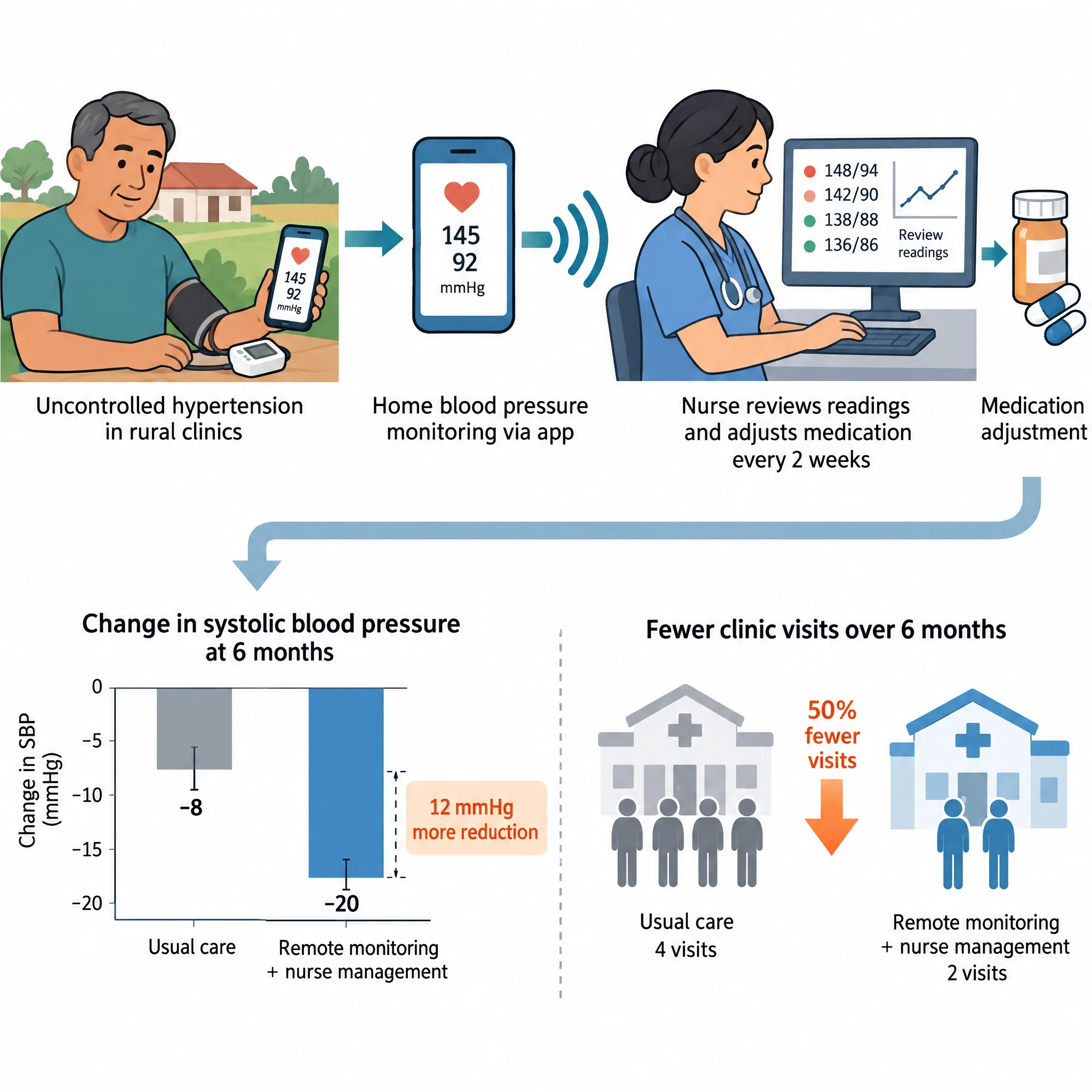
    Home readings and nurse follow-up lower blood pressure in rural clinics

    “Remote blood pressure monitoring in rural clinics. Top: adults with uncontrolled hypertension measure blood pressure at home with a cuff linked to a smartphone app. Middle: readings go to a nurse, who adjusts medication every two weeks. Bottom: after 6 months, systolic blood pressure falls by 12 mmHg more than with usual care, and fewer clinic visits are needed.”

    Square graphical abstract: patients measure blood pressure at home with an app, a nurse adjusts medication, and systolic blood pressure falls 12 mmHg more than with usual care
  4. Ecology

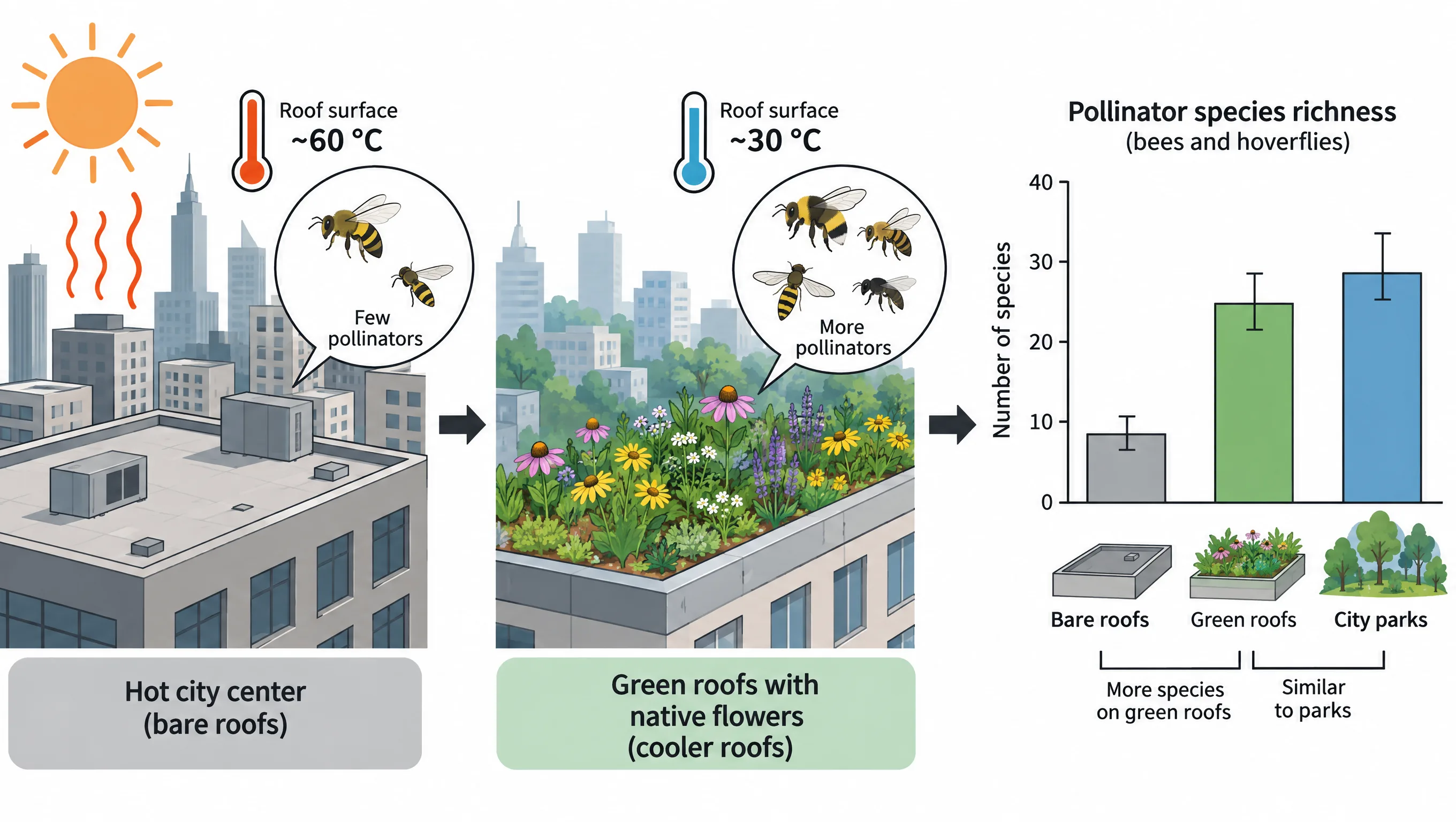
    Green roofs bring pollinators back to hot city centers

    “Urban heat lowers pollinator diversity, and green roofs bring it back. Left: a hot city center with bare roofs, high surface temperature and few bees. Middle: green roofs planted with native flowers cool the roof surface. Right: more bee and hoverfly species on green roofs than on bare roofs, close to the numbers in city parks.”

    Graphical abstract: hot bare roofs with few pollinators, cooler green roofs with native flowers and more bees, and a bar chart of species on bare roofs, green roofs and parks
  5. Plant science

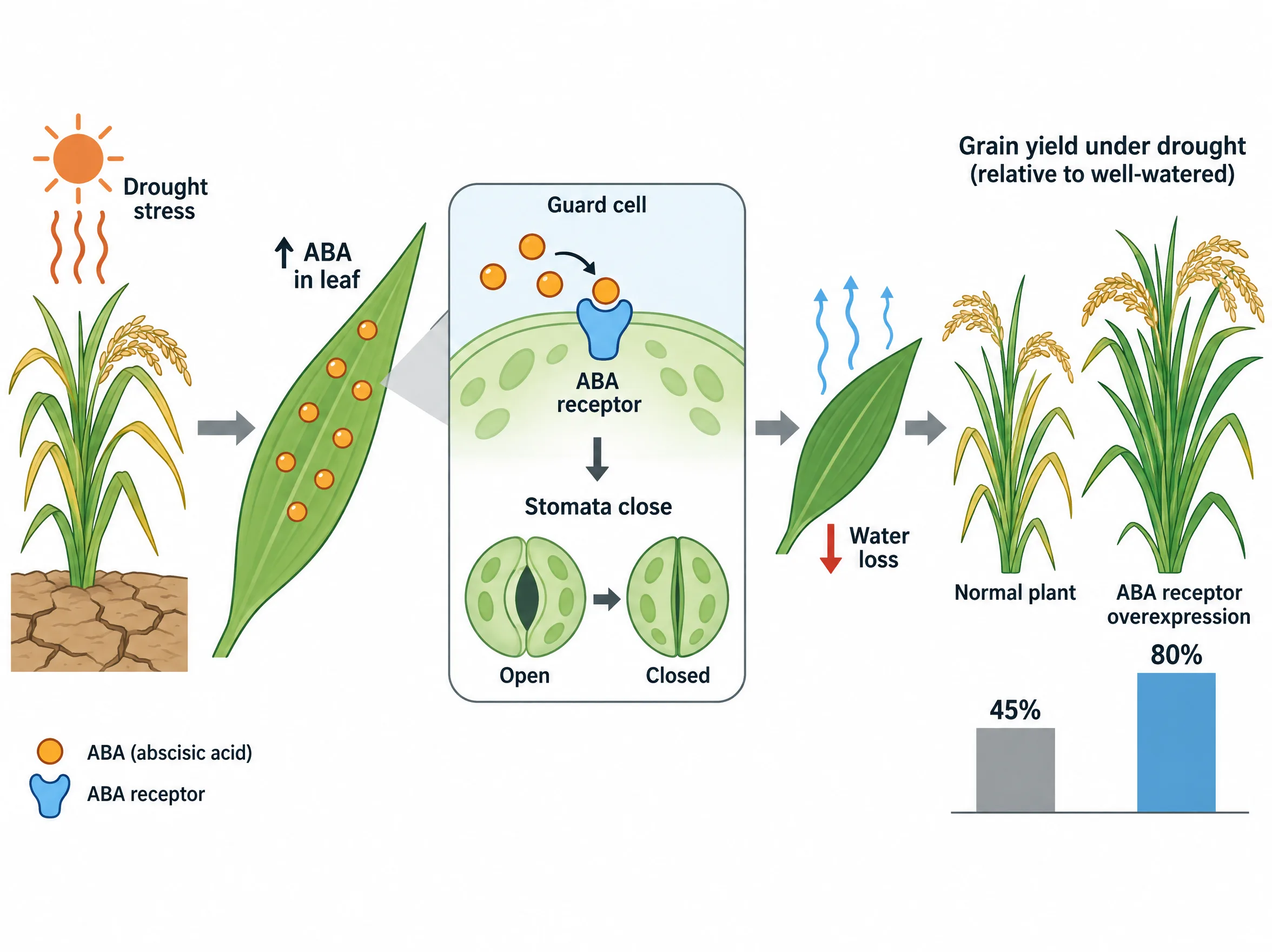
    More ABA receptor keeps rice yield up under drought

    “Drought tolerance in rice through the hormone ABA. Left: drought stress raises abscisic acid (ABA) in the leaf. Middle: ABA binds its receptor in guard cells and the stomata close, so less water is lost. Right: rice plants overexpressing the ABA receptor keep 80% of their grain yield under drought, against 45% for normal plants.”

    Graphical abstract: drought raises ABA in the rice leaf, ABA binds its receptor in guard cells and stomata close, and receptor-overexpressing rice keeps 80% of its yield against 45%

The studies and numbers are made up to show the format. Put your own results in the description, and the graphical abstract generator draws them the same way.

How to make a graphical abstract

How to make a graphical abstract for a research paper in three steps

The graphical abstract generator needs one thing from you: the abstract. Layout and a sketch are optional.

  1. 01

    Paste your abstract

    Four to six sentences work best: the problem, what you did, how it works and what you found. Name any labels you need.

  2. 02

    Pick the layout

    16:9 for wide slots, 1:1 for square ones, 4:3 in between. The publisher table above lists the sizes; crop the 2K image to the exact ratio.

  3. 03

    Download and check

    The 2K PNG is ready in under two minutes. Check every label and arrow; change one line of the text and draw it again if needed.

FAQ

Graphical abstract generator questions

Try the graphical abstract generator

Paste your abstract, pick the layout and download a 2K graphical abstract in under two minutes.